

You invested in a stock of bike covers, but they rip, fade, and fall apart within a season. This forces you to deal with angry customers, costly replacements, and a tarnished brand image.
A truly durable bicycle cover is built from high-density, ripstop fabric that resists tears, has a UPF50+ rating to prevent UV degradation, and is finished with reinforced seams, heavy-duty straps, and quality zippers to withstand years of real-world use.

As a manufacturer, I handle dozens of different fabrics and components every single day. I've learned that "durability" isn't a single feature you can just add to a product. It's the end result of many small, deliberate decisions made during the design and production process. For a B2B client, understanding these details is the key to sourcing a product that will build your brand instead of breaking it. Think of this as a purchasing checklist. When you know what to look for, you can easily tell the difference between a cover that looks tough and one that actually is tough.
How Do Fabric Weaves and Density Affect Longevity?
Your cover feels thick, but a single snag on a gear shifter results in a huge, unstoppable rip. The product fails, and you're left with an unhappy customer.
True strength comes from the fabric's construction. A ripstop weave contains tears in a small grid, while high-density fabric provides the core strength needed to resist punctures and abrasion in the first place.
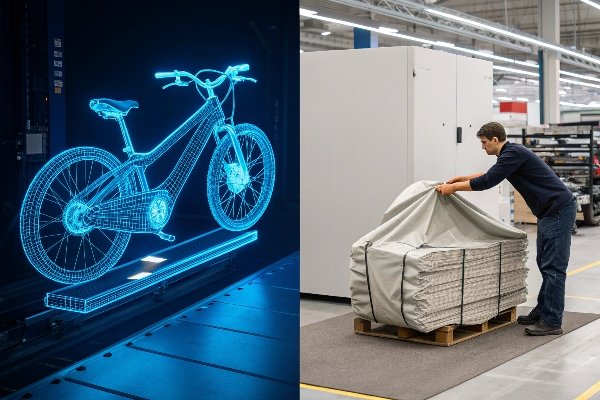
The foundation of any durable cover is the fabric itself. Let’s break down the two most important factors. First is the weave. A "ripstop" weave has a grid of thicker, stronger threads woven into the base fabric. If a puncture does occur, this grid acts like a firewall, stopping the tear from spreading across the entire cover. Second is density. This is a measure of the material's toughness and resistance to abrasion. A denser fabric is simply harder to wear down. This is where we specify materials that deliver on our promise of 300% tear strength. By combining these two elements, we create a fabric that doesn't just feel strong, but is structurally engineered to withstand the sharp edges of pedals, handlebars, and the general abuse of being used outdoors day after day. This is a critical checkpoint for any serious B2B buyer.
Why is UV Protection a Core Part of Durability?
Your bright, colorful covers look fantastic on your website. But after just one summer, customers complain they've faded to a dull gray and feel brittle, like old paper.
The sun's UV rays are relentlessly breaking down the fabric's fibers and color dyes. A durable cover must have both a UPF50+ coating to protect the material itself and high color fastness to maintain its appearance.

UV degradation is a silent killer of outdoor gear. The sun doesn't just fade colors; it actively destroys the chemical bonds in the fabric, making it weak and easy to tear. This is why a simple fabric isn't enough. Our covers are engineered with a UPF50+ rating, which means they block over 98% of harmful UV radiation. This dramatically slows down the aging process of the material. But what about the look? A faded product looks cheap and reflects poorly on your brand. That's where color fastness comes in. We use dyes and processes that achieve a Grade 4-5 rating, the industry standard for high-performance outdoor equipment. This ensures the cover looks vibrant and professional long after the purchase. It's a key part of our "Four-fold Protection" guarantee, and it's backed by our 2-year quality warranty.
What Small Details Actually Define a High-Quality Cover?
You sourced a cover with great fabric, but the plastic buckles shatter in the cold, the zipper jams with rust, and the stitching at the seams pulls apart under stress.
A cover is only as strong as its weakest link. High-quality construction depends on small but vital details: reinforced seams, sturdy straps, and corrosion-resistant hardware that won't fail prematurely.

The best fabric in the world is useless if the cover falls apart at the seams. This is where expert craftsmanship becomes just as important as material science. We focus on these critical finishing details that many low-cost manufacturers overlook. For example, all of our main structural seams are double-stitched. This adds a redundant layer of strength that prevents seams from pulling apart under tension, especially in high winds. The straps and buckles we use are not generic; they are chosen for their durability and resistance to becoming brittle in cold weather. Zippers are often the first point of failure, so we use components that resist rust and corrosion. As a B2B partner, we understand that these "small" details are actually huge. They are the difference between a one-season product and a long-term investment that builds trust in your brand. Our customization services allow you to specify exactly these kinds of premium components.
| Component | Low-Quality Standard | MeetCover's High-Quality Standard |
|---|---|---|
| Fabric Weave | Plain weave, rips easily | Ripstop weave stops tears from spreading |
| UV Protection | None, fades and weakens quickly | UPF50+ coating & Grade 4-5 Color Fastness |
| Seams | Single-stitched, prone to pulling apart | Double-stitched for redundant strength |
| Hardware | Cheap plastic/metal, breaks or rusts | Durable, weather-resistant buckles & zippers |
Conclusion
True durability comes from a combination of advanced fabric technology, superior UV protection, and meticulous attention to a cover's seams, straps, and hardware. These details are what create a truly lasting product.
